Category Archives: Being successful

New Year 2016 – are you sticking to your resolutions?

new-years-day-1111889_1280 copyPromote you business – If you are a small business, you should have a resolution of incorporating a Social Media strategy, this should include regularly posting on LinkedIn, Facebook and Twitter.  It is very easy to let this slip but consistency is the key.  Get up half an hour earlier and spend this time solely focusing on marketing.

Plan – Make a realistic business plan and stick to it, this can be a weekly or monthly plan where you can check and see that you are getting the jobs done.  You can then gauge to see what is working or not?

Learn new skills – This can incorporate learning and improving your Social Media skills.  Sign up to newsletters, attend webinars.

Set realistic goals – Aim to set out and complete realistic goals, these will be in line with your business plan.  Don’t aim too high as you will only be left disappointed, try to set mini goals on a monthly and quarterly basis.

Make sure your resolutions are implemented – Set aside a time, for instance a regular slot on a Friday afternoon, to run through the week.  Look at what has worked well and what needs improving, don’t be too hard on yourself, consistency is the key.

Happy New Year and hoping for continued success.


It’s not the size of your network, it’s the value in your network.

NetworkingI found this excellent article that makes a lot of sense, by Nevil Tynemouth – Author, Coach, Trainer, Speaker, Strategy. Sales & Management Training. LinkedIn Specialist. Personal & Business Growth.

Having more connections on any social media is good (same applies here on LinkedIn), but having a strong network that you support and help is key.  Likewise a network that supports and help you is much better. How do you add some value to your network?

  1. Share information that is useful to connections (especially your customers or potential customers). If you don’t know what to share, start answering the questions that virtually all of your customers ask you all of the time.
  2. Interact across social media and retain the “loose ties” that Malcolm Gladwell highlights in excellent book “Tipping Point”. A simple message or phone call into your network to say “Hi” can be a powerful way of growing value in your network.
  3. STOP, before you ask for help, think, what could I do to help others in my network, what would benefit those around me. Build up social credit and you will find your network reaching back to you to help you.

One common mistake to avoid (and one that frustrates me) is the need of some users to share loads of “JUNK!” I dropped into a LinkedIn group recently to see a so called social media expert (their words not mine) sharing article after article after article with no interaction from others. No interaction, and no engagement = no buy in and no value. Time to change what you are sharing.

If in doubt, it is all about what adds value to your network. Posting one great article is better that 10 hollow and vacant posts. Having 10 great connections that refer work to you is better than a 1,000 who sit quietly doing nothing.

It’s not the size of your network, it’s the value in your network.

The rise of the home business

You don’t have to look too hard to find stories of great British businesses that started life from home.

Shaun Pulfrey started Tangle Teezer from his two-bedroom flat, packing the first of his globally successful hairbrushes in the kitchen with his mum.

Andrew Ritchie created prototypes of his folding bicycle in the bedroom of his flat overlooking London’s Brompton Oratory – hence the name of the company, Brompton Bicycle.

Julie Deane started her Cambridge Satchel Company from home in 2008 with just £600; now it’s a global brand.

Songkick was founded in 2007 by Pete Smith, Ian Hogarth and Michelle You in Hogarth’s parents’ attic; the three friends who thought it was too hard to find out when their favorite bands were coming to town have now created the definitive online live music resource.

When Graham Hobson started a business developing orders for prints from digital photos, it began in the family garage; Photobox went on to become the UK’s leading provider of personalised products.

When Will King first began his toiletries business King of Shaves, he filled hundreds of small plastic bottles every day with shaving oil at his kitchen sink with a hand pump.

Tiffany London started her company at her kitchen table with £1,000 of startup capital. Her luxury maternity wear business Tiffany Rose won a Queen’s Award for International Trade in 2013.

Britain’s homes are alive with the sound of business.

There were 2.9m home businesses in 2013 – that’s 59 per cent of all businesses. Put another way, says Emma Jones, founder of Enterprise Nation, “70 per cent of new businesses in the UK start from home.”

Collectively, she adds, home businesses “contribute £243bn in turnover to the economy,” accounting for £1 in every £11 of turnover.

While there has always been a considerable number of home businesses – around 1.1m have been trading for over 20 years – their growth in the numbers rising fast.

It’s estimated that there are approximately 500,000 more home businesses than existed in 2010. And increasingly, says Jones, “business owners want to grow from home too.”

From kitchen table to supermarket: home food business

“There are many fantastic food businesses that have started from home and gone for gradual growth,” says Tessa Stuart who conducts in-store product research for many successful food brands.

The Northern Dough Company started out making pizzas at their kitchen table three years ago. Now their “make your own pizza” products can be found on the shelves of Waitrose.

Chris and Amy Cheadle, founders of The Northern Dough Company

The Lancashire-based company is the brainchild of husband and wife team Chris and Amy Cheadle. The idea for the business came after they hosted “make your own” pizza dinner parties for friends.

Jayne Hynes, a former chartered surveyor and mum-of two, is about to launch her own range of healthy frozen baby and infant food into Sainsbury’s stores across the UK. Kiddyumwas started and continues to be run from the kitchen table at her Manchester home.

Lucy Woodhouse and Merial Durand came up with a recipe for frozen Greek yoghurt lollies and took their concept to Sainsbury’s.  Claudi & Fin was stocked in 300 stores for the first time this summer.

Elisabeth Mahoney’s kitchen is the centre of  One Mile Bakery which delivers handmade artisan bread, seasonal soups and preserves within a one-mile radius her Cardiff townhouse home.

Popa Singh started Mr Singh’s Sauce in the garden shed. It has now outgrown the family shed – it is now a multi-million pound operation selling to Tesco, over 300 independent stores, and retailers across the globe – but remains family run.

The beauty of the home business: literally

Mother-of-two Fiona Wood set up Naturally Cool Kids in 2011 from her home near Leeds and in just three years has built a British-made natural skin care range that sells in John Lewis,Tesco Nutri Centre, Amazon and dozens of independent stores. With advice and support from UKTI, she now exports her products to Sweden, Malta, Gibraltar, Poland and Australia.

Oliver Bridge, a London-based Oxford University graduate, who launched his first business aged 15 (from his parents’ home), has just raised £160k to launch Cornerstone which delivers razors and shaving cream on subscription – the venture is based in a flat shared with his girlfriend.

Children: the inspiration for many home businesses

Designed by 28-year-old former investment banker Jennifer Duthie, Blackpool-based Skribbies are children’s shoes that can be customised every day. Kids can draw all over their shoes, wipe it off and draw something totally new on them.

Mum-of-three Jo Hockley, spotted a type of children’s bike on a trip to visit Belgian relatives, but could not find anything like it in the UK on her return. The ingenious German-designed product allows active toddlers aged 1-3 years old to develop cycling skills indoors and out.

Jo-Hockley 800x500

Jo reckoned the product would have wide appeal in the UK, not just for her own children. Today, Toddlebikes are stocked in independent stores as well as in John Lewis.

Ann-Maree Morrison’s three children were the motivating factor for the business and the source of the business idea. As her boys regularly lost their belongings, she decided a company producing labels for everything – rather than just clothing – would do well.  Labels 4 Kids has outgrown the home and now has an office and storage facilities.

When Sam Farmer went shopping for cosmetics for his teenage children, he hated the “pink, pouty and submissive packaging aimed at my daughter and the steel grey, macho stuff intended for my son.” He left determined to do something about it, going back to school, studying cosmetic science and formulating a unisex range, specifically for adolescent skin and hair.” His products – all made in Britain – are now stocked in SpaceNK.

Home decor flourishes as a home business sector

Victoria Cramsie got the idea for Paperboy Interiors from her two boys, makes stylish wallpaper and is building a new challenger brand to the established names such as Sanderson and Laura Ashley.

Linda Harking creates exclusive and individual bespoke text and photography wallpaper and personalised printed gifts made from her Basingstoke home.

With help from the Princes Trust, Staffordshire-based Lorna Horton  started up her own brand of printed fashion accessories featuring her own prints from original art work.

Lisa and Tida Finch, style-conscious identical twins, started making laser-cut jewellery from a living room studio shared with two friends. The young fashionistas are now selling in Urban Outfitters with pieces appearing in major Hollywood films.

Turning existing skills into a home business

Pudsey-based mum and former call centre adviser Tracey Marshall turned her embroidery hobby into Thread Squirrel in 2013, after first taking six months out to learn new skills and work out how she was going to monetise her skills. Today, the 52-year-old Yorkshirewoman’s map-inspired embroidered cushions and gifts are selling like hotcakes around the world on online craft platform ETSY and Not on the High Street.

A conscious decision to leave the rat race

Lara Young gave up her corporate life as an over-worked commercial lawyer to pursue her two passions – design and fitness. She launched GymLuxe last year and has already seen her British-made products perform at top level – on former Olympic gymnast and Dancing on Ice contestant Beth Tweedle.

Former city gilt trader Julia Hunter gave up the rat race to bring up her three children in the country.  She became frustrated with carrying her cushions in and out of the garden in the unpredictable English summer weather.  So she made some from waterproof oil skin.

All her friends wanted them as well, so she patented her secret waterproof system and set up Oily Rag.  She now supplies John Lewis and a number of independent stores.

The internet is the engine 

Stewart Rose runs his wine-related gifts online store with independent outlets across Britain and the world from a home office in Cheltenham

Diminutive optometrist Jess Jeetly is has built up an online retail store providing flattering clothes from smaller women.

Children’s author and illustrator Shoo Rayner has embraced the web from his shed, from where he attracts millions of people to his YouTube videos, drawings and ebooks.

All ages and types – the home business rainbow

Home businesses are being run by men and women of all ages. Corby Kuffour, a student at Queen Mary University, launched UK fashion sales website with two friends, running the business from respective student digs.

Melissa Mailer-Yates, the 55-year-old former portrait painter to the Queen’s corgis, is now running a company that turns Shakespeare’s characters into animated cartoons for young children. She has just received the 20,000th Start-Up Loan.

Former Exeter University graduate Ed Vickers started social enterprise Jollies Socks  – when you buy a pair of socks, another pair goes to a homeless person. Running the business from the family home, Jollies Socks are now being sold nationwide through John Lewis.

A converted garage in Dorset, former pharmacist Niamh Barker runs The Travelwrap Company around a husband and six children. The luxury Scottish cashmere travel wraps are being sold online to eight countries outside the UK and wholesale to 15 countries.

The home business that thinks big

Most home business don’t have employees but around 300,000 do have one or more employees. Many will remain modest enterprises. But others will expand – and  eventually leave home for an office.

Yet bedrooms, sheds and kitchens will always be the cradles of tomorrow’s mightiest enterprises.

After all, Jeff Bezos began a business called Amazon in an uninsulated, converted garage of his house and he built his first desks out of old doors.

Read more about how to start a home business.

(Source – HM Government)

Great to be appreciated!!

Jo MaloneThe other day I had a knock at the door to a lovely surprise parcel.  I had recently helped one of my clients organise a move into a new flat and had helped him and his partner to get things set up, including satellite TV and broadband and getting contracts signed for the let.   This is something that I normally would do on a day to day basis.  Fortunately my clients were so happy with the service that they sent me a fab Jo Malone candle as a thank you.  I must say this was a very unexpected but welcome gift.  Always nice to be appreciated!!

Re-work your to-do list

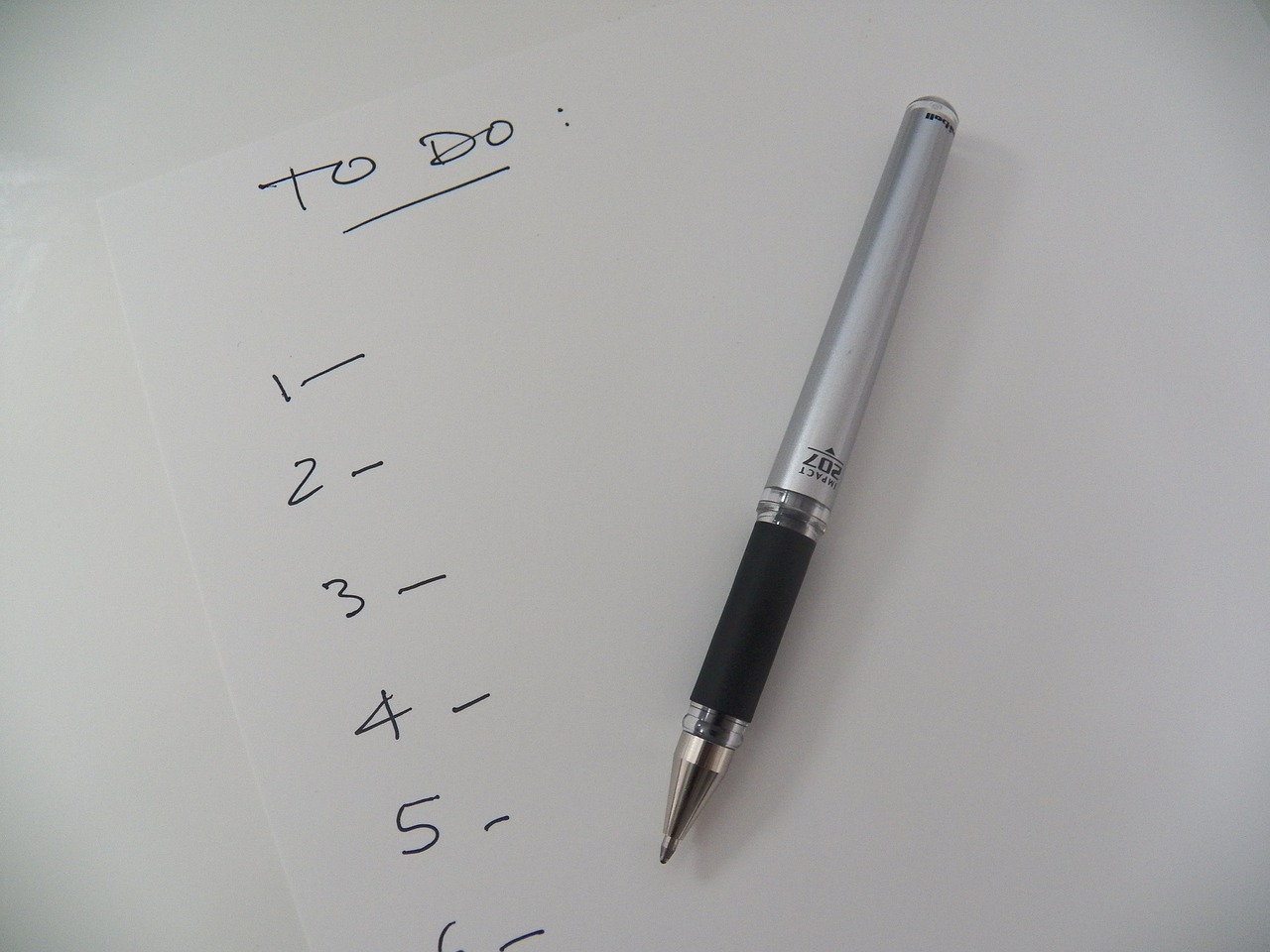
To do listLimit how many items you add to your list.  Don’t add more than three major tasks, these should be crucial ‘must do’ tasks, try to decide on these first thing in the morning for your ‘today’ list.  The rest of the tasks should consist of minor tasks, that need to be done but not immediately.  One good tip is to add these to your list last thing at night before bed, so that you empty your mind and don’t lie awake thinking about what needs to be done.  To reduce anxiety, jot down everything that you need to deal with, but move these around in order of priority.

“Your mind is for having ideas, not holding them.” Park your ideas on your to-do list, but make sure you create a “today” list and a “someday” list. (David Allen, the author of Getting Things Done)

Little things you can do to improve your workday

Silverglen Virtual Assistants

If you have to tackle an important task or assignment and feel distracted by a noisy office.  Pop on some earphones and listen to music.  I personally can’t work if it is quiet or with distractions, listening to the radio improves the way I work.

Keep your desk clean and tidy.  A cluttered desk equals a cluttered mind.  Keep it nice and clean too, especially if you tend to eat at your desk.  Your desk phone and keyboard will harbour all sorts of nasty bacteria.  Keep some anti bacterial and general screen wipes handy for a quick clean up.

It’s easy to get flustered over a missed deadline or an email you shouldn’t have sent, but it’s usually not as big of a deal as you make it out to be. Don’t get stressed about it, try and  calm your mind and map out your next steps. Take a deep breath, take a little walk or make a coffee to calm and re-think.

Its so easy to grab some lunch, eat at your desk, but this really is not good for your body and mind.  Try to get out, concentrate on your food, try to empty your mind and re-focus, so that when you return to your desk you will feel refreshed.

Try to take regular breaks from your desk, even if just popping to the loo.  This will help your posture and also rest your eyes from straining and focusing on a computer all day.

Time to update your Social Media

Virtual Assistance - Social Media

Virtual Assistance – Social Media

During August when things may be quiet on the business front, is a good time to get your Social Media up to date.

Social Media is a great tool to get yourself out there, be it using LinkedIn, Facebook or Twitter, it is always a good idea to raise your profile.

LinkedIn is a very important tool to promote yourself, you should be covering the basics:

Adding a LinkedIn button on your website.

Promoting across other social networks.

Regularly post content.

Building a large network.

Being active in groups.

Bet you send lots of emails? Something that you may not have thought about is adding a link to your LinkedIn page from your email signature.

Twitter is also a useful tool for engaging with lots of people and you can quickly grow your followers. If you haven’t done so already, create an interesting profile. Make sure your biography is approachable and friendly, make it clear what you do but add a bit of personality too.

Engage with followers, start conversations with interesting people and do retweet interesting conversations and pictures. You can also retweet interesting articles that you have read, adding your own comments.

Facebook – tell people about your business page and encourage them to like and share. You need to constantly add value and engagement on your page by adding great content.

Advertising your page using Facebook Ads is the surest way to add new fans. It’s cheap and you can specify a daily amount.

If you write any blogs on your website, make sure that you direct the traffic to your Facebook page.

I would love to hear your success stories, what tool do you find the most useful for your business?


Be your own Boss

BossBeing your own boss will more than likely seem overwhelming in the beginning, but in the end many people feel that the benefits far outweigh the costs

Being in charge of your income, can have both advantages and disadvantages in the beginning, but as you develop your business and your business grows, every penny you make is for you and not for an employer.

Have creative control, pick a business idea that you love, you get to make all creative decisions and do what you want when you want.

You are in charge of your success, as the business lies on your shoulders, success is down to you and you will have to work hard for yourself, not some large corporation.

Setting your hours is a huge advantage as you can work hours to suit you by building a schedule that works for you.

When you start your own business, it will be a risk, but you will be challenged.   As your business grows and becomes more successful, you will continue to be challenged to reach higher levels.

Being your own boss, means you can’t get fired! You don’t need to worry about someone suddenly taking away your income just because of cutbacks even if you’re doing a superb job.


Don’t forget the many benefits of hiring a Virtual Assistant

Typing on laptopYou may be a busy person, working independently, rushing from one meeting to the next, finding that juggling your diary and travel is just too much. You are a small business that has started to grow, you are spending time on your new clients and admin falls to the bottom of your to do list. This is the time when hiring a VA is a very useful and often a crucial solution. Your VA will take over and organise your day to day work, leaving you free to attend to the more important tasks of growing your business and dealing with clients.

Why a VA?

No need to advertise and interview a prospective person, we do that for you, ensuring that the VA is qualified and comply with your needs.

No need to have hassle with payroll, NI and holiday pay.

No office space or equipment to provide.

No need to employ someone at certain hours, only pay for hours worked.

You can feel secure in delegating tasks to your VA, these can include diary and email management, message taking, travel arrangements, lifestyle management, social media, events management, updating your website, marketing and anything else that you need help with.

Your VA will be highly experienced and sourced for your needs.

Advantages of working from home

happy womanManagers can assume that employees who work remotely are not really working. This is because they lose oversight and are not able to see productivity. The problem lies with managers not setting goals and outcomes. In the office environment, the manager sees the worker and witnesses productivity, when in fact they are only seeing presence. The fact is, that when a person works from home, they become more productive, as distractions and stresses are lessened.

Some advantages of working from home are:

Flexibility – does not only relate to timing, although flexible hours is an important factor, the environment is also important; lighting, temperature, mood.

Less distractions – colleagues banter and distractions, not having to attend unimportant meetings.

Being near to home and family – especially important if you have young children.

Less stress – you will not turn up at the office agitated from a stressful commute.

More productivity – removing distractions and stresses from the office will make you more productive.

Better health – by cutting out commuting which can be anywhere from 1 – 3 hours per day, you will have free time to exercise or go to the gym.

All of the above gives you a better work/life balance.

There are of course disadvantages of working form home, but I think the advantages far outweigh these.